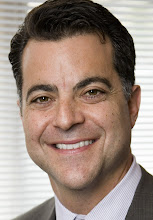
In general, surgery is considered more dangerous than non-surgical solutions to problems. But is this always true? In the case of eye surgery, the answer may actually be NO! LASIK surgery in Michigan causes vision-threatening problems less often than contact lenses. This may be surprising to some, but any eye doctor will tell you the facts!
Most problems caused by contact lenses are due to overwear. Patients should strive to limit wear time to 12 hours each day, and then switch to glasses. Even lenses that are FDA approved for overnight wear can be dangerous. A British study showed that overnight wear increases the risk of serious infection fourteen times over daily wear!
Contact lenses can cause infection, corneal ulcers, corneal abrasions, punctate keratopathy, and sub-epithelial infiiltrates. Commonly, a specific problem called Giant Papillary Conjunctivitis (GPC) is caused by overwear, and may be difficult to cure.
It is very rare for LASIK to result in any form of infection, and when performed on proper candidates for surgery, results in excellent vision within 24 hours. Scarring, abrasions and ulcers are also very rare.
Consider LASIK surgery, for the safety of your eyes! Call Dr. Goldstein's office to arrange a free evaluation 586-323-2020, and check out his website, too!
Monday, July 25, 2011


Monday, July 18, 2011
Cataract Diagnosis and Preventiom
Cataract diagnosis is usually not a very difficult problem, but it can be challenging in areas where access to a doctor isn't easy. This is true in rural areas of the United States, and in lesser developed countries.
CNN reported recently that smartphones may be the answer to this problem! A small device is attached to the phone, and the phone is held up to each eye individually. The software focuses beams of light into the eye, and the patient presses a button when the light appears faded. Next, the software analyzes the information, and provides a virtual map of the cataract in the patient's eye!
This information may be used to guide patients in their need for surgery, or to counsel them to avoid smoking or ultraviolet light. These are two of the biggest promoters of cataracts, and moderation can slow down the progression of cataracts.
Ultimately, cataract surgery is usually needed to cure the problem, and is very successful. A quick, painless outpatient procedure is performed, and vision is restored.
For more information, call Dr. Goldstein's office for an appointment at 586-323-2020, or go to his website.
CNN reported recently that smartphones may be the answer to this problem! A small device is attached to the phone, and the phone is held up to each eye individually. The software focuses beams of light into the eye, and the patient presses a button when the light appears faded. Next, the software analyzes the information, and provides a virtual map of the cataract in the patient's eye!
This information may be used to guide patients in their need for surgery, or to counsel them to avoid smoking or ultraviolet light. These are two of the biggest promoters of cataracts, and moderation can slow down the progression of cataracts.
Ultimately, cataract surgery is usually needed to cure the problem, and is very successful. A quick, painless outpatient procedure is performed, and vision is restored.
For more information, call Dr. Goldstein's office for an appointment at 586-323-2020, or go to his website.
Thursday, July 14, 2011
Cataract Surgery Safety
A recent article in the Journal "Ophthalmology" indicates that cataract surgery is safe, even after the age of 90!
The study actually compared outcomes and complications in 80 year olds and 90 year olds, and found no statistical difference in the safety of surgery in these 2 age groups. Interesting, because many patients believe that, once they get 'too old', they should not have surgery because it won't go well. They are worried that it is too risky.
Cataract surgery is the most commonly performed surgery in the U.S. today, and is also the most successful surgery performed in the U.S. today. As an added benefit, cataract patients are benefitting from new technology that allows more freedom from glasses. With the use of such advanced technology implants as the crystalens implant, most patients are completely free of glasses.
More information is available from Dr. William Goldstein, who performs a dozen or more cataract surgeries each week. You can make an appointment by calling 586-323-2020, or visiting the website, 2020vision.com
The study actually compared outcomes and complications in 80 year olds and 90 year olds, and found no statistical difference in the safety of surgery in these 2 age groups. Interesting, because many patients believe that, once they get 'too old', they should not have surgery because it won't go well. They are worried that it is too risky.
Cataract surgery is the most commonly performed surgery in the U.S. today, and is also the most successful surgery performed in the U.S. today. As an added benefit, cataract patients are benefitting from new technology that allows more freedom from glasses. With the use of such advanced technology implants as the crystalens implant, most patients are completely free of glasses.
More information is available from Dr. William Goldstein, who performs a dozen or more cataract surgeries each week. You can make an appointment by calling 586-323-2020, or visiting the website, 2020vision.com
Thursday, July 07, 2011
Macular degeneration treatment
Macular degeneration is one of the leading causes of blindness in the world, and is the number one cause of blindness in the older population in the Unted States. There is treatment for some of the forms of macular degeneration, and there are a few preventative measures that people can employ as well.
Patients with wet macular degeneration, where bleeding is occuring under the retina, may benefit from medications that are injected into the eye. These medications, known as anti-VEGF's, cause the abnormal bleeding vessels to shrink down and stop bleeding. These medications may not only stop the vision loss, but may actually lead to an improvement in vision in many patients. Injections usually need to be repeated several times to bring about reduction of swelling and bleeding. These injections may take several months to complete, and improvement in vision may take much longer.
Several surgical options have been used in the past, including removal of the leaking blood vessels, and use of laser to shrink them. Unfortunately, these options often cause severe immediate decreases in vision.
Patients with risk factors for macular degeneration will benefit from vitamins that follow the AREDS study, and will also benefit from the use of sunglasses and hats to prevent exposure to ultraviolet light.
Dr. William Goldstein helps patients with vision problems such as macular degeneration maintain good vision. Call for an appointment, 586-323-2020, or go to www.2020vision.com for more information
Patients with wet macular degeneration, where bleeding is occuring under the retina, may benefit from medications that are injected into the eye. These medications, known as anti-VEGF's, cause the abnormal bleeding vessels to shrink down and stop bleeding. These medications may not only stop the vision loss, but may actually lead to an improvement in vision in many patients. Injections usually need to be repeated several times to bring about reduction of swelling and bleeding. These injections may take several months to complete, and improvement in vision may take much longer.
Several surgical options have been used in the past, including removal of the leaking blood vessels, and use of laser to shrink them. Unfortunately, these options often cause severe immediate decreases in vision.
Patients with risk factors for macular degeneration will benefit from vitamins that follow the AREDS study, and will also benefit from the use of sunglasses and hats to prevent exposure to ultraviolet light.
Dr. William Goldstein helps patients with vision problems such as macular degeneration maintain good vision. Call for an appointment, 586-323-2020, or go to www.2020vision.com for more information
Monday, June 27, 2011
Why are blue eyes blue?
The sappy 70's song "Don't it make my brown eyes blue" inevitibly leads us to think about whether brown eyes can be turned blue. Maybe the song was inspired by colored contact lenses! But why are there variations in eye color? Why are there so few blue-eyed people?
An article in the journal Human Genetics from 2008, indicates that blue eyes are the result of a single gene mutation that occurred between 6000 and 10000 years ago. The article was written by a cellular molecular biologist, Hans Eiberg.
"A genetic mutation affecting the OCA2 gene in our chromosomes resulted in the creation of a 'switch,' which literally 'turned off' the ability to produce brown eyes," Eiberg said.
The genetic switch is located in the gene adjacent to OCA2 and rather than completely turning off the gene, the switch limits its action, which reduces the production of melanin in the iris. In effect, the turned-down switch diluted brown eyes to blue.
In some patients, this switch is completely off, and their bodies do not produce any melanin. These people are known as albinos, and have the characteristic white hair, and skin, as well as irises that have no color.
So, if brown eyes are from melanin, which is brown, how does lack of melanin cause blue eyes? This is because the deeper layers of the iris absorb most wavelengths of light, while allowing the blue wavelangths to reflect back to the observer. So there is actually no blue pigment in the iris of blue-eyed people!
Dr. William Goldstein provides the best in eye care. Call now to make an appointment, 586-899-9393, or visit the website, www.2020vision.com
An article in the journal Human Genetics from 2008, indicates that blue eyes are the result of a single gene mutation that occurred between 6000 and 10000 years ago. The article was written by a cellular molecular biologist, Hans Eiberg.
"A genetic mutation affecting the OCA2 gene in our chromosomes resulted in the creation of a 'switch,' which literally 'turned off' the ability to produce brown eyes," Eiberg said.
The genetic switch is located in the gene adjacent to OCA2 and rather than completely turning off the gene, the switch limits its action, which reduces the production of melanin in the iris. In effect, the turned-down switch diluted brown eyes to blue.
In some patients, this switch is completely off, and their bodies do not produce any melanin. These people are known as albinos, and have the characteristic white hair, and skin, as well as irises that have no color.
So, if brown eyes are from melanin, which is brown, how does lack of melanin cause blue eyes? This is because the deeper layers of the iris absorb most wavelengths of light, while allowing the blue wavelangths to reflect back to the observer. So there is actually no blue pigment in the iris of blue-eyed people!
Dr. William Goldstein provides the best in eye care. Call now to make an appointment, 586-899-9393, or visit the website, www.2020vision.com
Thursday, June 23, 2011
My eyes ITCH! Itchy eyes and allergies.
NBC's 'Nightly News' recently teased one of their stories with the statement that this year may be our worst year for allergies EVER. The story went on to explain that high levels of rain lead to more plant growth, and thus more pollen and other allergens in the air.
My staff and I can certainly lend some credence to the statements made on that TV show! We are seeing a very high frequency of allergic conjunctivitis or 'allergy eyes' in our office this spring.
Allergies cause a pretty classic set of symptoms, of which itching is the most common. Redness of the white of the eye, and eyelids is also pretty typical, along with a white discharge and some tearing. Both eyes are usually equally involved, and there may also be light sensitivity in some patients.
Treatment consists of cool compresses to ease the itching and artificial tears to rinse out the mucous and the pollens and other allergens that may be the cause of the problem. Prescription eyedrops are more effective than the over-the-counter drops that are available, and may also last longer during the day, so that they won't need to be taken as often. Occasionally, a steroid eyedrop may be needed for a couple of weeks.
Proper diagnosis and treatment by an ophthalmologist, such as Dr. Goldstein, may allow a speedier recovery from the problem. Call the office at 586-323-2020 to arrange an appointment. You can also check out the website,
My staff and I can certainly lend some credence to the statements made on that TV show! We are seeing a very high frequency of allergic conjunctivitis or 'allergy eyes' in our office this spring.
Allergies cause a pretty classic set of symptoms, of which itching is the most common. Redness of the white of the eye, and eyelids is also pretty typical, along with a white discharge and some tearing. Both eyes are usually equally involved, and there may also be light sensitivity in some patients.
Treatment consists of cool compresses to ease the itching and artificial tears to rinse out the mucous and the pollens and other allergens that may be the cause of the problem. Prescription eyedrops are more effective than the over-the-counter drops that are available, and may also last longer during the day, so that they won't need to be taken as often. Occasionally, a steroid eyedrop may be needed for a couple of weeks.
Proper diagnosis and treatment by an ophthalmologist, such as Dr. Goldstein, may allow a speedier recovery from the problem. Call the office at 586-323-2020 to arrange an appointment. You can also check out the website,
Monday, June 20, 2011
Astigmatism, a Common Cause of Blurry Vision
Astigmatism is one of the most mistunderstood terms in eye care. In fact, it almost sounds like a life-threatening disease when some patients talk about it! "How can I have LASIK, Dr. Goldstein? I have....ASTIGMATISM!". And really, it's just another common cause of blurry vision.
In most cases, astigmatism is actually a very benign condition, and one that can be treated very successfully. The first step is to understand what astigmatism really is. Actually, astigmatism is similar to near and farsightedness. It is merely a problem in the way that the eye focuses light. Astigmatism occurs when the eye has unequal curvature, and is shaped like a football instead of round in all directions like a basketball. This difference in curve causes two points of focus in side the eye. Nearsighted, or myopic patients have eyes that are too long, and farsighted, or hyperopic patients have shorter than ideal eyes. The treatment of astigmatism is similar to treating nearsightedness and farsightedness. A slightly different approach must be taken, but the solutions are the same!
Glasses, conact lenses, LASIK and other surgeries are very successful in restoring the rounded curvature needed for good vision. Even cataract and relex patients can enjoy good vision with the use of toric lens implants. So, just like near and farsightedness, astigmatism is merely a 'refractive error' that can be treated to allow good vision in almost all patients.
More information is available on Dr. Goldstein's website, www.2020vision.com, and appointments can be made by calling the office at 586-323-2020
In most cases, astigmatism is actually a very benign condition, and one that can be treated very successfully. The first step is to understand what astigmatism really is. Actually, astigmatism is similar to near and farsightedness. It is merely a problem in the way that the eye focuses light. Astigmatism occurs when the eye has unequal curvature, and is shaped like a football instead of round in all directions like a basketball. This difference in curve causes two points of focus in side the eye. Nearsighted, or myopic patients have eyes that are too long, and farsighted, or hyperopic patients have shorter than ideal eyes. The treatment of astigmatism is similar to treating nearsightedness and farsightedness. A slightly different approach must be taken, but the solutions are the same!
Glasses, conact lenses, LASIK and other surgeries are very successful in restoring the rounded curvature needed for good vision. Even cataract and relex patients can enjoy good vision with the use of toric lens implants. So, just like near and farsightedness, astigmatism is merely a 'refractive error' that can be treated to allow good vision in almost all patients.
More information is available on Dr. Goldstein's website, www.2020vision.com, and appointments can be made by calling the office at 586-323-2020
Friday, June 17, 2011
Cataract Surgery in Detroit
Should you be afraid of cataract surgery? Many people are, mainly because they feel that they could have damage to their vision from surgery. Others just say "I hate having anything near my eye". But cataract surgery in Detroit is nothing to fear, especially when performed by Dr. William Goldstein! In fact, cataract surgery is the most commonly performed, and most successful surgery in the United States today.
Dr. Goldstein uses the most modern technique for surgery, to make is safer, easier, faster, and painless for his patients. The technique is one used by only 30 % of surgeons in the United States, and includeds topical anesthetic and a no-stitch incision. Topical anesthetic means that only eyedrops and gels are used, so no needles are placed behind the eye. This incrases safety, and also means that the eye can see immediately. No patch is needed after surgery due to this modern technique. The crystalens cataract surgery includes a crystalens implant that can help to eliminate the need for glasses for distance AND reading!
Surgery generally takes about 10 minutes, and the results are immediately apparent. Dr. Goldstein usually performs 10-13 cataract surgeries per day on his O.R. day.
Call Dr. Goldstein's office at 586-323-2020 to make an appointment today.
Dr. Goldstein uses the most modern technique for surgery, to make is safer, easier, faster, and painless for his patients. The technique is one used by only 30 % of surgeons in the United States, and includeds topical anesthetic and a no-stitch incision. Topical anesthetic means that only eyedrops and gels are used, so no needles are placed behind the eye. This incrases safety, and also means that the eye can see immediately. No patch is needed after surgery due to this modern technique. The crystalens cataract surgery includes a crystalens implant that can help to eliminate the need for glasses for distance AND reading!
Surgery generally takes about 10 minutes, and the results are immediately apparent. Dr. Goldstein usually performs 10-13 cataract surgeries per day on his O.R. day.
Call Dr. Goldstein's office at 586-323-2020 to make an appointment today.
Monday, June 13, 2011
Glaucoma Treatment Options
The diagnosis of glaucoma becomes more common as we age, and about 1 out of every 3 patients over the age of 70 has diagnosis. But some studies show that up to 50% of glaucoma goes undiagnosed. And once diagnosed, treatment may be difficult or expensive for patients, leading to ineffective treatment, and potential loss of vision. The approach to treatment of glaucoma is a great example of an area of medicine which involves employing some of “The Art of the Practice of Medicine”. Medical therapy can be used, as well as laser treatment, and even surgical intervention.
• Eyedrops
o Many different drops available
o Some decrease production of fluid inside the eye
o Others increase drainage of fluid out of the eye
o Very effective
• Laser therapy aka ALT (Argon Laser Trabeculoplasty)
o May be used as first-line therapy
o Very effective
o May be repeated later in life if needed
o Often decreases or eliminates the need for eye drops for treatment
• Surgical treatment (Trabeculectomy)
o Usually only employed when other therapies are ineffective
o Higher risk, therefore not used as first-line, but rather when damage has already occurred.
Dr. William Goldstein of the Laser Eye Care Center has the most advanced equipment for the diagnosis of glaucoma. He has extensive experience with the disease, and treatment with all modes of therapy to ensure preservation of vision in these patients. Call 586-323-2020 to arrange an appointment with Dr. Goldstein.
• Eyedrops
o Many different drops available
o Some decrease production of fluid inside the eye
o Others increase drainage of fluid out of the eye
o Very effective
• Laser therapy aka ALT (Argon Laser Trabeculoplasty)
o May be used as first-line therapy
o Very effective
o May be repeated later in life if needed
o Often decreases or eliminates the need for eye drops for treatment
• Surgical treatment (Trabeculectomy)
o Usually only employed when other therapies are ineffective
o Higher risk, therefore not used as first-line, but rather when damage has already occurred.
Dr. William Goldstein of the Laser Eye Care Center has the most advanced equipment for the diagnosis of glaucoma. He has extensive experience with the disease, and treatment with all modes of therapy to ensure preservation of vision in these patients. Call 586-323-2020 to arrange an appointment with Dr. Goldstein.
Thursday, June 09, 2011
Reading glasses-why do we need them?
Reading glasses are one of the most frustrating additions to our wardrobe that you can think of! They are one of the solutions to the only disease that affects 100% of the human population, "presbyopia". And to add insult to injury, that word means "aging vision"! Everyone eventually realizes that they cannot see well when they bring things close to their eyes, and begin to hold objects and reading material further away to see them clearly. The only problem is that, eventually, our arms are not long enough and the print on the page is too small if we hold things too far away.
Most people have heard of over-the-counter readers, or drug store readers. These actually work very well for most people to bring things back into focus. If a person is already wearing glasses, bifocals can be made with the reading portion in the bottom part of the lenses. Contact lens wearers may choose monovision contacts, where one eye is corrected for near and one for distance, or multifocal lenses, in which many focal distances are built into the same contact lens. Monovision LASIK is also possible, and many successful monovision patients go this route when the have surgery.
Another surgical alternative is ReLEx surgery. ReLEx stands for Refractive Lens Exchange. In this surgery, the natural lens is removed from the eye, and replaced with a lens implant that can give all points of focus. The advantage over monovision is that both eyes are seeing the same image at the same time. More info is available at www.2020vision.com
Most people have heard of over-the-counter readers, or drug store readers. These actually work very well for most people to bring things back into focus. If a person is already wearing glasses, bifocals can be made with the reading portion in the bottom part of the lenses. Contact lens wearers may choose monovision contacts, where one eye is corrected for near and one for distance, or multifocal lenses, in which many focal distances are built into the same contact lens. Monovision LASIK is also possible, and many successful monovision patients go this route when the have surgery.
Another surgical alternative is ReLEx surgery. ReLEx stands for Refractive Lens Exchange. In this surgery, the natural lens is removed from the eye, and replaced with a lens implant that can give all points of focus. The advantage over monovision is that both eyes are seeing the same image at the same time. More info is available at www.2020vision.com
Monday, June 06, 2011
Why have LASIK surgery in Detroit by Dr. William Goldstein
Why should you have LASIK surgery in Detroit by Dr. William Goldstein? Here are a few great reasons!!
Experience: is one of the most important aspects of finding a surgeon. Dr. Goldstein was one of the first in Michigan to perform LASIK in 1996. He has thousands of happy patients, including doctors, surgeons, nurses and all of their family members.
Reputation is gained only when a surgeon has satisfied patients and doctors who trust him. Dr. Goldstein has become known as the "Doctor That Doctors Trust". There is good reason for that!
Results are the ultimate measure of a good surgeon. Dr. Goldstein has consistently provided results that were superior to the ones found in the FDA studies.
Personal involvement can be difficult to find in an eye doctor's office. Dr. Goldstein sees every patient, every time, whether preop LASIK, performing the surgery, or postop care.
"Up-to-date technology" is the only way to go. The Visx S4 laser with iris registration, tracking and CustomVue treatment is the most tested and most commonly used LASIK laser in the U.S. Dr. Goldstein does not compromise, he only uses a laser that is the best and most up-to-date.
Call Dr. Goldstein's office now at 586-323-2020 for a free LASIK evaluation! You will meet Dr. Goldstein personally and discuss your options.
Experience: is one of the most important aspects of finding a surgeon. Dr. Goldstein was one of the first in Michigan to perform LASIK in 1996. He has thousands of happy patients, including doctors, surgeons, nurses and all of their family members.
Reputation is gained only when a surgeon has satisfied patients and doctors who trust him. Dr. Goldstein has become known as the "Doctor That Doctors Trust". There is good reason for that!
Results are the ultimate measure of a good surgeon. Dr. Goldstein has consistently provided results that were superior to the ones found in the FDA studies.
Personal involvement can be difficult to find in an eye doctor's office. Dr. Goldstein sees every patient, every time, whether preop LASIK, performing the surgery, or postop care.
"Up-to-date technology" is the only way to go. The Visx S4 laser with iris registration, tracking and CustomVue treatment is the most tested and most commonly used LASIK laser in the U.S. Dr. Goldstein does not compromise, he only uses a laser that is the best and most up-to-date.
Call Dr. Goldstein's office now at 586-323-2020 for a free LASIK evaluation! You will meet Dr. Goldstein personally and discuss your options.
Friday, June 03, 2011
Blepharitis: The most common diagnosis for itchy eyes
In an eye doctor's office, not a day goes by without a patient complaining of itchy eyes. This is because itching is the most common way in which the eye indicates inflammation, regardless of the cause. Allergic conjunctivitis, blepharitis, and contact lens-related inflammation can all cause itching.
The most common cause of itching is blepharitis, which is inflammation of the eyelids and eyelashes. Patients will often indicate that the eyelids are also slightly swollen and red. They will also have crusting or mattering at the base of the eyelashes. Some patients call this 'crystalized eyelids', and they will often need a warm washrag to clean their eyelids when they wake up in the morning.
Blepharitis may be linked to allergies, normal bacteria that we all have on our eyelids, skin conditions such as excema or rosacea, or may not have an obvious cause.
The first-line therapy for blepharitis is to cleanse the eyelids daily with a dilute solution of baby shampoo. Commercial preparations, in the form of medicated pads, are available, but can be expensive. If standard lid scrubs with baby shampoo are ineffective, these may work more efficiently. Occasionally a combined antibiotic/steroid eyedrop may be needed. Rarely, antibiotic pills may be necessary if the case is particularly resistant to other modes of treatment.
Blepharitis is a long-term problem that recurs if treatment is stopped. Many patients need to perform lid hygeine every day, and still have flare-ups that require an office visit to their eye doctor
The most common cause of itching is blepharitis, which is inflammation of the eyelids and eyelashes. Patients will often indicate that the eyelids are also slightly swollen and red. They will also have crusting or mattering at the base of the eyelashes. Some patients call this 'crystalized eyelids', and they will often need a warm washrag to clean their eyelids when they wake up in the morning.
Blepharitis may be linked to allergies, normal bacteria that we all have on our eyelids, skin conditions such as excema or rosacea, or may not have an obvious cause.
The first-line therapy for blepharitis is to cleanse the eyelids daily with a dilute solution of baby shampoo. Commercial preparations, in the form of medicated pads, are available, but can be expensive. If standard lid scrubs with baby shampoo are ineffective, these may work more efficiently. Occasionally a combined antibiotic/steroid eyedrop may be needed. Rarely, antibiotic pills may be necessary if the case is particularly resistant to other modes of treatment.
Blepharitis is a long-term problem that recurs if treatment is stopped. Many patients need to perform lid hygeine every day, and still have flare-ups that require an office visit to their eye doctor
Subscribe to:
Posts (Atom)