Showing posts with label ReLEx surgery. Show all posts
Showing posts with label ReLEx surgery. Show all posts
Tuesday, October 23, 2012
Lens exchange surgery cures cataracts
The newest, most advanced surgical technique for gaining independence from glasses is lens exchange surgery in Detroit, also known as ReLEx surgery. This surgery is the way that patients can get rid of glasses for distance, intermediate, and near vision all at the same time. And it cures cataracts as well!
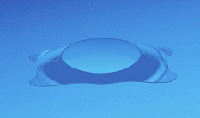
The surgery is fairly simple, it is also quick and painless. Patients are taken to an outpatient surgery center, where the natural lens of the eye is removed using a micro-incision. A lens implant such as the Crystalens implant is placed in the same position that the natural lens used to be. The incision does not need stitches, so patients are comfortable very quickly after their surgery.
Over the course of the next couple of weeks, the intermediate vision improves to the point where patients can see their dashboard in the car, and their computer as well as distance vision without glasses. Texting and more detailed work may take a few months as the vision clears and the muscles develop to flex the implant.
So, how does this surgery cure cataracts? Cataracts grow inside the natural lens of the eye. When that lens is removed, the cataracts have no where to grow, and if early cataracts have already formed, they are removed. This surgery is identical to cataract surgery in Detroit.
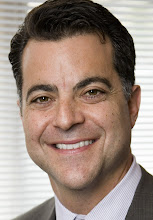
Contact Dr. William Goldstein's office for more information, by calling 586-323-2020, or by checking out the 20/20 vision website!


Thursday, June 09, 2011
Reading glasses-why do we need them?
Reading glasses are one of the most frustrating additions to our wardrobe that you can think of! They are one of the solutions to the only disease that affects 100% of the human population, "presbyopia". And to add insult to injury, that word means "aging vision"! Everyone eventually realizes that they cannot see well when they bring things close to their eyes, and begin to hold objects and reading material further away to see them clearly. The only problem is that, eventually, our arms are not long enough and the print on the page is too small if we hold things too far away.
Most people have heard of over-the-counter readers, or drug store readers. These actually work very well for most people to bring things back into focus. If a person is already wearing glasses, bifocals can be made with the reading portion in the bottom part of the lenses. Contact lens wearers may choose monovision contacts, where one eye is corrected for near and one for distance, or multifocal lenses, in which many focal distances are built into the same contact lens. Monovision LASIK is also possible, and many successful monovision patients go this route when the have surgery.
Another surgical alternative is ReLEx surgery. ReLEx stands for Refractive Lens Exchange. In this surgery, the natural lens is removed from the eye, and replaced with a lens implant that can give all points of focus. The advantage over monovision is that both eyes are seeing the same image at the same time. More info is available at www.2020vision.com
Most people have heard of over-the-counter readers, or drug store readers. These actually work very well for most people to bring things back into focus. If a person is already wearing glasses, bifocals can be made with the reading portion in the bottom part of the lenses. Contact lens wearers may choose monovision contacts, where one eye is corrected for near and one for distance, or multifocal lenses, in which many focal distances are built into the same contact lens. Monovision LASIK is also possible, and many successful monovision patients go this route when the have surgery.
Another surgical alternative is ReLEx surgery. ReLEx stands for Refractive Lens Exchange. In this surgery, the natural lens is removed from the eye, and replaced with a lens implant that can give all points of focus. The advantage over monovision is that both eyes are seeing the same image at the same time. More info is available at www.2020vision.com
Monday, May 16, 2011
What is 20/20 vision?
20/20 vision has always been considered "perfect vision" by most people. And of course we have all heard nearsighted individuals call themselves blind! But it is hard to know what '20/20 vision' means, and we all know that nearsighted people are not truly blind.
The term '20/20 vision' became known as perfect vision because eye doctors used examining rooms, known as 'lanes' that were 20 feet long! If a patient could see normal sized letters at 20 feet, this was perfect vision. If they needed letters that were twice normal size, they had 20/40 vision, meaning that they were still 20 feet from the letters, but someone with perfect vision could stand 40 feet away and still see the letters.
Blindness is defined as 20/200 vision or worse in both eyes WITH corrective lenses or contact lenses. For this reason, as long as they wear their proper correction, nearsighted patients are not truly blind!
To find out more about 20/20 vision, or about eye surgeries such as LASIK or ReLEx surgery, please visit www.2020vision.com or call 586-323-2020 today. Visit the office of Dr. William Goldstein.
The term '20/20 vision' became known as perfect vision because eye doctors used examining rooms, known as 'lanes' that were 20 feet long! If a patient could see normal sized letters at 20 feet, this was perfect vision. If they needed letters that were twice normal size, they had 20/40 vision, meaning that they were still 20 feet from the letters, but someone with perfect vision could stand 40 feet away and still see the letters.
Blindness is defined as 20/200 vision or worse in both eyes WITH corrective lenses or contact lenses. For this reason, as long as they wear their proper correction, nearsighted patients are not truly blind!
To find out more about 20/20 vision, or about eye surgeries such as LASIK or ReLEx surgery, please visit www.2020vision.com or call 586-323-2020 today. Visit the office of Dr. William Goldstein.
Subscribe to:
Posts (Atom)